
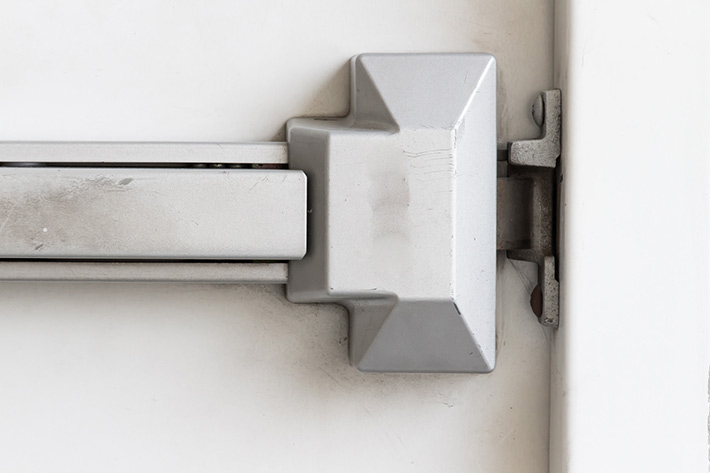
Exit devices are the kind of hardware you only notice when they stop behaving. For months, the door opens with a push and latches with a clean click. Then one day, the bar feels mushy, the latch drags, or the door will not catch unless someone gives it a shove.
In a busy building, those little changes quickly turn into bigger problems. People start forcing the door. The latch starts chewing up the strike. Someone props the door open “just for a minute.” Now you have a security issue, and depending on the door, you may also have a life-safety issue.
Panic hardware is built to take abuse, but it still has moving parts and will eventually require repair.
When it starts acting up, the best move is to fix it early rather than wait for a full failure.
Exit devices that stick or won’t latch: what’s usually going on
Most exit device troubles fall into a few buckets, and you can often narrow them down by paying attention to when the problem shows up.
The door is out of alignment.
This is the most common cause. If the door has sagged slightly or the frame has shifted, the latch may no longer line up cleanly with the strike. People feel this as a door that “almost” latches, or a latch that catches only if you pull the door tight.
The latch and strike are getting chewed up.
When alignment is off, the latch hits metal instead of sliding into place. Over time, you see shiny scrape marks, burrs, or chipped edges on the strike opening. The door may start bouncing off the latch instead of catching.
The device is dry, dirty, or worn.
Grease hardens, dust builds up, parts loosen. A bar that used to move smoothly starts feeling stiff or gritty. If a business has high traffic, those wear can show up sooner than people expect.
The door closer is fighting the exit device.
If a closer is slamming the door or closing too slowly, it can cause a latching issue that appears to be a device failure. A set that is too close can leave the door short of a full latch. A closer that is too fast can cause bounce-back.
Something is loose.
A rattling push bar, a device that flexes when pushed, or a handle that feels wobbly is often a mounting issue. The screws and through-bolts take a beating over time, especially on doors that get shoved open all day.
Early warning signs your staff will notice first
The best time to fix panic hardware is when it is annoying, not when it is broken. These are the complaints that usually show up before the device quits:
● The door latches sometimes, but not every time.
● The bar feels stiff at the start of the push, then suddenly gives.
● The latch drags or makes a metal-on-metal scrape sound.
● The door needs a hard push to latch, or it only latches if someone pulls it shut.
● The bar rattles when the door closes.
● You see new scrape marks on the strike plate, latch, or frame.
● The device works fine in the morning, but later in the day it gets worse as traffic gets heavier.
If you hear “it only sticks sometimes,” take it seriously. Intermittent hardware problems usually become consistent problems quickly once wear patterns start.
What you can check without turning it into a DIY project
There are a few safe checks you can do as a business owner or facilities manager. The goal is not to repair it yourself. The goal is to identify what changed so the fix is faster.
Look at the latch and strike.
If you see fresh scrapes or burrs, alignment is likely a contributing factor. You can often tell where it is hitting by the shiny wear marks.
Watch the door close.
Does it reach full close and then bounce back? Does it slow down and stop short? Does it slam? Those behaviors often point to a need for a closer adjustment or a door alignment problem.
Check for obvious looseness.
If the push bar or end caps wiggle, or the device housing has movement, the mounting hardware may need attention. Loose hardware also accelerates wear on internal parts.
Ask when it happens.
Only during windy conditions, only after a rush of foot traffic, only when the door is propped open and then released. The timing often points you to the root cause.
What you should avoid is spraying random lubricants into the device or loosening screws without knowing what they do. Some products attract dirt and worsen over time. A small adjustment in the wrong place can also throw off latching and create a new problem.
Why “just replace it” is not always the answer.
Exit devices vary a lot: rim, mortise, vertical rod, concealed rod, alarmed, electrified, and more. Replacement might be the right move when the device is worn out, but many issues are fixable without a full rip-and-replace.
Often, the real fix is in the door and frame: correcting sag, tightening hinges, adjusting the strike, tuning the closer, and then servicing the device so it moves smoothly again. When those pieces are handled in the right order, the device usually feels “new” to staff, even if the hardware stays in place.A trusted local commercial locksmith can take care of all your door and lock issues, including repair and replacement if needed.
When it’s Time to Call in a Locksmith
If the door is required for egress, part of a fire-rated assembly, or protects a secure area, do not let the problem drift. A door that does not reliably latch is not a small issue in a commercial setting. It affects safety, security, and day-to-day operations.
If your exit device is sticking, rattling, or failing to latch consistently, Action Locksmith Inc. can diagnose whether the problem is alignment, closer settings, worn hardware, or a combination, then repair or replace the device so the door closes and latches the way it should. With more than 30 years of experience and industry knowledge, our locksmith services have been trusted by homes and businesses throughout Southeast Michigan.