
Electric strikes seem “set it and forget it” until someone is stuck pulling on a door that should open. You hear the buzzer, see the access light go green, hear the strike click—yet the door won’t release. People pull harder, the frame flexes, and the problem quickly worsens.
If an electric strike buzzes but won’t release, the cause is usually alignment, power, or worn hardware. The challenge is to identify the issue before wasting time and patience or damaging the door.
When in doubt, it’s best to call a licensed locksmith.
Here’s what you need to know.
What an electric strike is actually doing
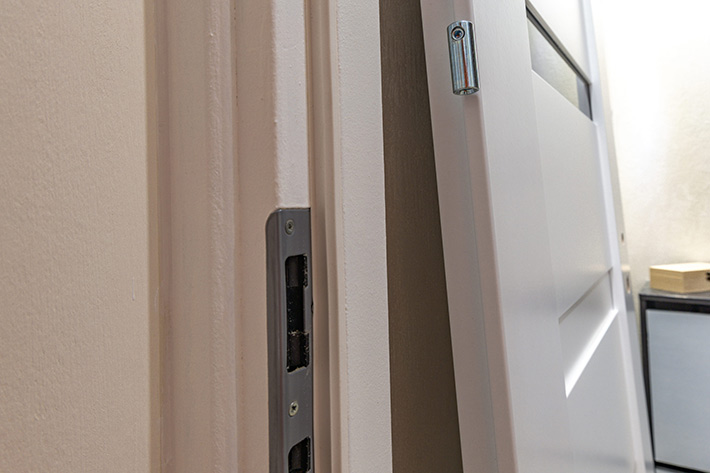
An electric strike is a device that replaces the standard, non-powered strike plate—the metal plate the door latch fits into—in the door frame. Instead of being fixed, this powered strike plate (called the keeper) can be briefly unlocked by electricity, allowing the door’s normal latch (the part that extends from the door edge) to slip free when someone is granted access.
This detail matters because the electric strike can still function properly even when the door is jammed. If the latch (the spring-loaded part that sticks out from the door edge) is pressed tightly against the powered keeper inside the strike plate, the keeper might not have enough movement to open up, even though electricity has released it.
The most common reason: the door is pushing on the latch
This classic scenario in offices and storefronts occurs when someone swipes a badge, the strike clicks, and nothing happens because the latch is slightly misaligned or the latch is loaded against the keeper.
You’ll often see clues if you look closely:
● shiny scrape marks where the latch is rubbing
● The paint wore off the frame right around the keeper.
● a door that only releases if you push it inward first, then try again
A small shift in the door’s position can cause big problems. Sagging hinges, a loose closer, swelling, or frequent slamming can misalign it just enough to bind.
A quick reality check: if the electric strike unlocks the latch when you gently hold the door closed, but fails when the door is pulled tightly or pushed hard, you are likely facing an issue called preload (constant pressure on the latch) and misalignment (door not lining up with the strike).
Power and wiring issues that appear to be “bad hardware.”
If alignment’s fine, the next likely problem is power. Electric strikes are reliable, but need the correct voltage under load.
What can go wrong:
● Undersized power supply: the strike clicks, but doesn’t fully actuate.
● Voltage drop: A decrease in electrical voltage between the power supply and the strike can occur due to long wire runs, thin wires, or too many devices sharing a single power supply. This lowers the voltage at the strike and can cause problems.
● Loose connections: A wire nut or terminal that is “almost tight” will fail intermittently.
● Wrong type of power: Some electric strikes are made to work with alternating current (AC), some with direct current (DC), and some are rated for both. Using the wrong type can cause weak unlocking or vibration noises.
● Access control timing: the strike may be energized for too brief a period, especially if the door is heavy or users hesitate.
Intermittent failure is the signature here. It works in the morning, fails at lunch rush, and works again later. Or it fails only when multiple doors are being used at the same time.
The strike is doing its job, but the door hardware isn’t
Sometimes the electric strike is fine, and the latch itself is the issue. A worn latch, a misadjusted latchbolt, or a failing lockset can keep the latch from retracting cleanly or from sitting correctly in the keeper.
Watch for:
● a latch that doesn’t spring back crisply when you open the door by hand
● a latch that scrapes even when the strike is not energized
● a deadlatch feature (a secondary latch mechanism that stops the main latch from retracting unless the correct action is taken) that is not engaging correctly, which is common on some commercial locks
You may also have trouble if a closer slams the door, driving the latch hard into the keeper. This makes release harder and accelerates wear.
Quick checks a facilities manager can do safely.
You don’t need to open wiring to gather useful info.
1. Try this test: while someone triggers access, gently push the door toward the frame, then try pulling it open.If it releases with that push, alignment and preload are the likely issues.
2. Look for wear marks: scrape lines and shiny metal tell you where it’s binding.
3. Listen for the strike: a strong, clean “click” is different from a weak buzz or chatter.
4. Check the pattern: does it fail only when the HVAC kicks on (air pressure), only on windy days, or only at peak traffic? Those patterns point toward door pressure and alignment more than the strike itself.
If the problem persists and can’t be resolved with a gentle push, schedule a service call. Forcing it just spreads damage to the door, frame, and closer.
When replacement is the right call
Electric strikes do wear out, especially in high-traffic doors. If the keeper is loose, the housing is worn, or the strike has been “fought” for months, you end up with a cycle in which adjustments help briefly, only to drift out again.
Replacement also makes sense when:
● The existing strike is the wrong size or type for the door and lock.
● The door has been modified repeatedly, and the cutout is sloppy.
● The access control system is being upgraded, and the strike no longer matches the plan.
A good replacement isn’t just swapping parts. It means matching the strike to the lock, usage, traffic, and power/control setup, then aligning it for clean latch operation.
Reliable Locksmith Services for Homes and Businesses
From electric strike repairs to lock replacements and door hardware solutions, Action Locksmith Inc. provides dependable residential and commercial locksmith services. Our team can identify the issue, recommend the right fix, and help keep your property secure and accessible. Call today to schedule service.