
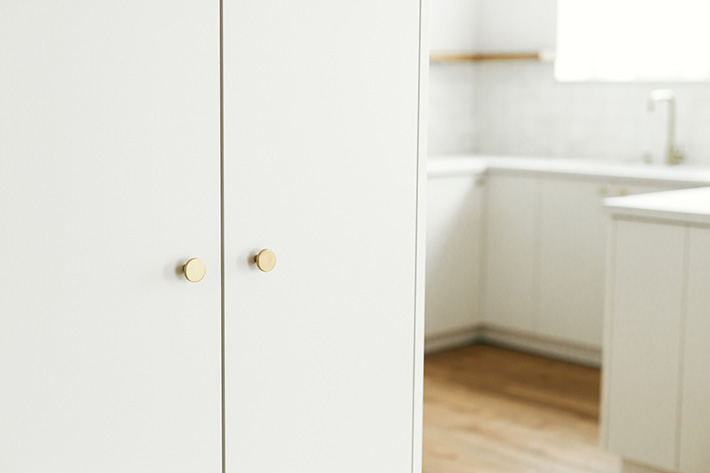
Have you ever turned a doorknob and found that it didn’t turn? Surprising right? They are called “dummy doorknobs” and are found in almost any home or workplace. They don’t latch, rotate or lock as standard doorknobs do. Instead, they are fixed, mostly used for decoration, or where there is no need for a traditional latch mechanism to be installed.
Let’s take a look at their uses, the reasons behind their installation and how they can bring style and convenience into your living area. You may find that you need them in you home or office if you don’t already have them.
What Are Dummy Doorknobs?
These are non-functional handles which are put on doors that do not need a latch or for purely decorative purposes. There are two main types of these knobs: single and double dummies. When using a single dummy knob, it is installed on one side of the door while the double ones are used on both sides. Normally these types of knobs are surface mounted meaning they have no inner working parts.
How Are They Used?
Here are some scenarios where they can be applied:
Closet and Pantry Doors– These doors require only handles to pull them open since they do not have latches.
Double Doors– In cases of French doors or any other double arrangements where one leaf is fixed while another needs functional knobs; symmetry may demand that a dummy be fitted onto the fixed leaf so that outward appearance could remain balanced.
Cabinets & Furniture Pieces– Large pieces of furniture with doors matching those of a room can be uniformly fitted with dummy knobs in addition to other hardware already in place for similar reasons.
Dummy doorknobs are usually installed to keep a uniform appearance over a space. When all door hardware blends with each other it gives off a neat and professional look. In addition, they are also easier to put up than working knobs because you don’t have to cut out holes for latches or locks.
Here are specific reasons why they are used:
Aesthetic Uniformity– This is done by keeping design in the same line especially where there are many doors within one place.
Simplicity in Accessibility – Such doors can be opened without much hassle hence providing a handle for them without having to be latched or locked.
Cheap Solution – Dummy doorknobs are less costly compared to working ones making it more economical where the former are used for non operative doors.
How to install dummy doorknobs
1. Marking Position – Measure the height at which you want your knob situated on the door then mark it.
2. Alignment of Base Plate – Hold the base plate of the knob against the door aligning it with previous mark made.
3. Attaching Knob Securely – using screws attach base plate to the door and repeat this process for a double dummy knob on other side if necessary .
4. Finishing Touches – Ensure that the handles are tight enough while checking if they are well arranged so as to achieve professional finishing.
Recap
Dummy doorknobs serve as an attractive alternative solution for doors that don’t require a latch to be closed. They offer both aesthetic consistency and operational simplicity thus being widely favored by homeowners or businesses alike. Whether used on closets, pairs of swinging doors or simply for decoration purposes, dummy doorknobs serve a specific purpose on different types of doors and how they function.
Don’t Forget about the Traditional Doorknobs!
Have you thought about your doorknobs lately? Since functioning doorknobs are crucial to your home’s safety, it might be a good idea to do a run through and check them out. If you find that some doorknobs, especially the ones that are on entry doors aren’t functioning correctly, don’t wait to get them fixed. Reach out to the pros at Action Locksmith Inc in Southeastern Michigan for all your residential locksmith services.
We’ll take on any door, door lock, or security issue you are having. Call and speak to an experienced locksmith today!